Showing posts with label Virtual Institute. Show all posts

Wednesday, December 16, 2015

Review of “Genealogical Evidence and Proof”

Once again I am pleased to have a guest author review one of the courses from the Virtual Institute of Genealogical Research. This post features a course on genealogical evidence, and is written by my friend Cari Taplin, CG. 

Review of “Genealogical Evidence and Proof” taught by Warren Bittner, CG for the Virtual Institute of Genealogical Research
by Cari A. Taplin, CG[1]

When I first learned about the “Genealogical Proof Standard” and its five components, I was overwhelmed; a lot of beginning or intermediate genealogists probably are. It took a long time for me to embrace the GPS in my daily genealogical practice. No matter how many lectures you might attend on the subject, the process will never be as simplified and broken down into steps for you like the latest course by Warren Bittner from the Virtual Institute of Genealogical Research (VIGR) titled “Genealogical Evidence and Proof.” It is a must have in your genealogical education plan.

This course cuts through a lot of GPS confusion and breaks it down to manageable and understandable pieces. The four lectures this course consisted of are:

•    “Complex Evidence: What it is, How it works, Why it matters”
•    “The Web of Evidence: Proof and Disproof”
•    “Proof Arguments: How and Why”
•    “Exhaustive Research, Evidence Analysis, and Genealogical Proof”

Each of these lectures contained educational gems for genealogists of any level. Every class began with a reminder that genealogy is the pursuit to: identify an individual and identify correct relationships between individuals. “Failure to do these two things is a waste of time,” he said throughout the course. Proper use of the GPS ensures we are not wasting our time.

Warren has a gentle teaching method yet still tells it like it is. One of my favorite quotes from the second class, “There are two kinds of genealogists: those that read the NGSQ and those that don’t.” He pointed out that he (and other top-notch genealogists) learned to use the GPS and write proof arguments through reading quality journal articles, not only from the National Genealogical Society Quarterly, but also the New England Historical and Genealogical Register, The American Genealogist, The New York Genealogical & Biographical Society Record, and the American Society of Genealogists’ The Genealogist. Only by reading and studying other, high quality proof arguments, regardless of their geographic subject or the surnames involved, will we be able to craft our own.

He especially encouraged the class to complete GPS step five, “a soundly reasoned, coherently written conclusion,” because failure to write down our thought process identifying the correct person or relationship dooms the next generation to repeat the research.[2] Warren discussed approximately sixteen different steps for writing a proof argument, beginning with making a statement about what is going to be proven, stating the type of proof that will be used (direct, indirect, conflicting or most likely a combination of all), and working through steps for analysis, resolving conflicts, and drawing conclusions. Sixteen! I have never had an instructor break the process down so completely. It was utterly amazing and his course made so many often unnoticed details become visible.

Warren ended the series of classes by stating that “the more I work with the GPS the more I am impressed by it.” He also admonished those who have shied away from pursuing certification from the Board for Certification of Genealogists (BCG) because they didn’t have a “good case study” for the portfolio. He said he doesn’t know one genealogist that doesn’t have at least two documents with points of conflict that could be written into an acceptable case study. Whether or not you are interested in certification, this course should be high on your list of educational requirements for yourself. Warren’s deconstruction of the process is invaluable for gaining a better understanding of the GPS process.


[1] CG and Certified Genealogist are service marks of the Board for Certification of Genealogists, used under license by board certified associates after periodic competency evaluations, and the board name is registered in the US Patent & Trademark Office.
[2] For the description of step five of the GPS see Board for Certification of Genealogists, Genealogy Standards (Nashville, Tennessee: Ancestry, 2014), 3. 
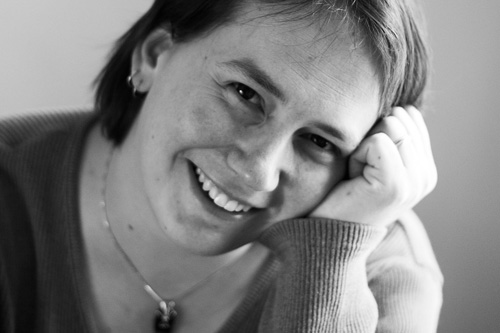

Cari Taplin is related to Roy Rogers. Or at least the stories her grandparents told her as a child said so. As a result, she has been working on finding her true heritage since the year 2000. She is a native of Wood County, Ohio but migrated to Wyoming, Colorado and now Pflugerville, Texas which is just outside of Austin. Cari is a Certified Genealogist and has served in a wide variety of volunteer and leadership positions for several state, local, and national societies, most recently elected as Region 2 - Midwest Director for the Association of Professional Genealogists, Director of the Federation of Genealogical Societies, and the Education Committee Chair for the Austin Genealogical Society. She has been a speaker to local and state societies since 2004. As the owner of GenealogyPANTS, she provides speaking, research and consultation services. She is also a graduate of ProGen 16. When she’s not working on her genealogy, she is a wife and mother of two/too cute kids.

Sunday, November 22, 2015

Review of Genetic Genealogy for Professional Genealogists


As part of my continuing series on genealogical institute courses, I asked my friend Mary Kathryn Kozy to share her perspective on the most recent course offered by the Virtual Institute of Genealogical Research. "Genetic Genealogy for Professional Genealogists" was taught by Blaine Bettinger, PhD, JD, and will soon be available for purchase and download.

Review of "Genetic Genealogy for Professional Genealogists"
By Mary Kathryn Kozy

Webinars are a terrific way to increase our knowledge and help us in our personal and professional genealogical pursuits. The Virtual Institute of Genealogical Research (VIGR) is offering wonderful courses by leaders in many genealogical fields. I recently attended Genetic Genealogy for Professional Genealogists taught by Blaine Bettinger, a well-known leader in genetic genealogy. Since I teach classes on DNA topics in my community, I was anxious to learn a little more about what professional genetic genealogists do, and I can’t recommend it highly enough! 


If you’re unfamiliar with the format of VIGR’s courses, the first half is typically offered in two 90-minute presentations with a short break in between on the first day. Homework is then assigned that will be reviewed during one of the two remaining lectures the following week. Some courses have a different schedule, and are taught one presentation per week for four consecutive weeks. Blaine’s course also allowed students to purchase a “plus” session which included a further homework assignment that could be anonymously reviewed during an additional one-hour webinar.

Here are just some of the topics included in this great four-session course:

  •  Why become a professional genetic genealogist? 
  •   Ways to incorporate DNA services into your professional genealogical practice
  •   Issues you will face as a genetic genealogist
  •    Client contracts and avoiding conflicts
  •   Finding clients
  •    Educating yourself and your clients
  •    Writing client reports

What this class didn’t cover was the basics of DNA testing. It was assumed that students already had that knowledge. For those who want to delve more into autosomal DNA, there’s another VIGR course taught by Blaine entitled (Finally!) Understanding Autosomal DNA.


Now I’m not currently a professional genealogist, but I do want to be one when I grow up! So even though this course dealt with aspects of adding DNA to one’s professional practice, there was still plenty of terrific information for genealogists like me. While I might never have a paying client, the suggestions given for how to create a contract, as well as the information on how to educate a client about their results was invaluable. In working with DNA results, it’s a sure thing that we will inevitably face sensitive and unexpected results. Blaine provided great counsel on how to handle these situations. The additional “plus” session gave students a chance to evaluate a client’s test results, write a basic report, and get feedback from Blaine on those reports, which was also indispensable. I particularly enjoyed this session, since it allowed me to learn from the other great genealogists in the class.


If you’ve even considered adding DNA testing analysis or other DNA services to your professional practice, then you will definitely want to take this course. By the end I had not only had some great “aha!” moments, but I’d also received a boost in confidence that perhaps I can do this one day!


Mary Kathryn Kozy is a rabid genealogist of long standing. She has a B.S. in Zoology and a B.S. in Information Systems and Technology. She has recently completed the Mastering Genealogical Proof study group and is working her way through the ProGen Study Program in ProGen 24. She enjoys lecturing on a number of genealogical topics, but is most frequently requested to speak on DNA. Mary has served on the board of several genealogical societies and is the recent past president of the Jewish Genealogical Society of Washington State.

Sunday, August 30, 2015

New Course on Federal Land Records

I  am very excited to be teaching a course on “Digging in Federal Land Records” for the Virtual Institute of Genealogical Research. This course will be held on two consecutive Saturdays: September 19th and 26th. There will be four 90 minute sessions that will allow us to dig further into these records than the typical lectures on the subject. 

Millions of Americans obtained land from the federal government either by purchase, donation, military bounty, or homesteading. The records created by these land transactions can be valuable for locating an ancestor in a particular time and place, and may also contain useful family information. Some land files include a detailed description of improvements made to the land, evidence of military service, proof of naturalization, and/or testimony from neighbors. 
This course will cover the distribution of land in the thirty public land states to individuals from 1798 to 1976. The sessions will take an in-depth look at the process for obtaining land, the records created, and the genealogical value they contain. Students will learn about the surveying process and legal land descriptions, the Acts of Congress authorizing different types of transactions, the process for applying for land, and what can be found online and only onsite at NARA. 
The unique format of four 90 minute sessions will allow time to dig deeper into these records and look at not only typical files for each type of transaction, but unique circumstances as well. The “plus” version of the course will also include feedback on the homework assignments and an extra session for asking individual questions about federal land records. 
Saturday, September 19th
Session 1: Background: History, Land Descriptions, Laws and Records
Session 2: Locating Records: BLM Website, Tract Books and Finding Aids
Homework assignment given

Saturday, September 26th
Session 3: Homesteads, Land Entry Papers and Military Bounty Land
Session 4: Case Studies Using Federal Land Records

To register for the course visit http://vigrgenealogy.com/schedule/mcghie-land/
The cost is $69.99 for all four sessions, or $99.99 for all four sessions plus feedback on the homework and an additional sessions where you can ask any questions you may have on the course content or on federal land records. 

Friday, May 22, 2015

Drawing for a Free Course at the Virtual Institute of Genealogy

I am excited to share the press release from the Virtual Institute of Genealogical Research. In honor of Memorial Day they are having a drawing for a free course, and everyone that registers this weekend will be entered in the drawing. There are some excellent courses that have just opened up for registration (Disclosure: I will be teaching one of the courses).

Virtual Institute of Genealogical Research Announces Upcoming Courses and Offers Memorial Day Drawing for Free Course  


RALEIGH, North Carolina, 22 May 2015. 
Registration is currently open for six upcoming courses offered by the Virtual Institute of Genealogical Research.


“We are very excited about these new courses, covering genetic genealogy; English, German and Native American research; and U.S. federal land and Revolutionary War records,” said co-administrator Michael Hait, CG. “The response to our courses has been outstanding! The Virtual Institute is an excellent option for in-depth genealogical education, especially for those with limited travel options.”


In celebration of Memorial Day, the Virtual Institute is also offering a drawing for everyone who registers for a course between Friday, 22 May 2015 and Monday, 25 May 2015 at midnight (U.S. Eastern). Each registrant will be entered into the drawing to win a free additional course ($69.99 value). Those registering for multiple courses will receive multiple entries. Three winners will be drawn. The prizes can be applied to any standard course prior to 31 December 2016, not including the original course registration.


Registration for the following courses is currently open:


●      Paul Milner, “An In-Depth Look at the Big Four Records of English Research,” 30 May–6 June 2015

●      F. Warren Bittner, CG, “Reading German III: Practice Reading German Church Records”, 8 June, 15 June, 22 June, 29 June 2015

●      Bille Stone Fogarty, MEd, and Rick Fogarty, “Verifying the Family Legend of Native American Ancestry,” 20 June–27 June 2015

●      Craig R. Scott, CG, “A Day in the Revolution: Researching Your Soldier,” 1 August–8 August 2015

●      Angela Packer McGhie, “Digging in Federal Land Records,” 19 September–26 September 2015

●      Blaine Bettinger, PhD, JD, “Genetic Genealogy for the Professional Genealogist,” 7 November–14 November 2015


About the Virtual Institute of Genealogical Research


The Virtual Institute of Genealogical Research offers year-round online education on a wide variety of genealogical subjects. Each course consists of six hours of live instruction, extensive syllabus material, and practical exercises. Limited class sizes and a Plus course option allow for a higher level of class participation and instructor feedback than typically offered by genealogy webinars. For more information visit www.vigrgenealogy.com or email vigrgenealogy@gmail.com.

Monday, April 6, 2015

Whether Right-Brained or Left, This DNA Class is for You!


I am excited to share a review of the “(Finally!) Understanding Autosomal DNA” course taught by Blaine Bettinger at the Virtual Institute of Genealogical Research. Today my friend Cari Taplin, CG is a guest author sharing her opinion of this new course. This is part of my continuing series on genealogy institute courses, where attendees share their perspective on the course for others who may be interested in attending in the future (or in the case of the Virtual Institute, purchasing the course online).

Whether Right-Brained or Left, This DNA Class is for You!

By Cari A. Taplin, cg

I have a Bachelor’s Degree in Fine Arts with an emphasis in painting. I tell you this so you can understand that science and numbers don’t really come too easily for me. I rely on my calculator for even the simplest mathematical tasks, and even then, I’m never sure if I got it right. So, when DNA for genealogy became the latest and greatest research tool, I tried to pay attention at the various lectures I attended, but all those numbers just went over my head and my eyes glazed over.

Despite being more scientific than many genealogists I know, it seems that this whole DNA thing is not going to go away and it appeals to and attracts the more left-brained researcher that may have been put off by genealogical “proof” from more traditional methods. And when some of the biggest names in genealogy are taking it seriously and also taking classes on it, I took notice. I attended SLIG this past January where Elizabeth Shown Mills was a student in one of the DNA classes! Many of my genealogy friends have taken several classes on the subject. Sometimes peer pressure can be a good thing because I finally began my reluctant journey to learn more about the topic. 

I decided to take the online course offered by the Virtual Institute of Genealogical Research with the title “(Finally!) Understanding Autosomal DNA” taught by Blaine Bettinger. What an excellent course! Blaine is not only very knowledgeable about the subject, being among the first to begin using DNA for genealogical purposes, but so very clear in his explanation of the subject matter. While some of the topics could have been heavy on math and science, he really has a way of breaking down the subject matter so that even I could understand what was going on. My eyes did not glaze over during the course’s roughly 12 hours of class time.

Blaine covered a variety of topics pertaining to autosomal DNA such as how autosomal DNA works biologically, how it gets passed down, how autosomal DNA can be used to determine relationships, various tools to use to help with analysis of DNA results, including those at the test providers’ sites as well as third-party tools such as GEDmatch, triangulation of DNA results, using a spreadsheet to work with your matches, and much more. He also covered such topics as DNA ethics and asking for spit in ways that get results. 

If you’ve never taken a course through the Virtual Institute of Genealogical Research (www.vigrgenealogy.com), you should give it a try. I have taken two courses so far and they have both been top notch! They are not like your average webinar. These courses take an in depth look at the topic and feel closer to a week-long institute than your typical single afternoon genealogy class. Past classes are available for purchase through the Virtual Institute’s website.

For more details on the “(Finally!) Understanding Autosomal DNA” course by Blaine Bettinger, or to purchase a copy of the recordings, see http://vigrgenealogy.com/store/bettinger-finally-autosomal/
Cari Taplin is related to Roy Rogers. Or at least the stories her grandparents told her as a child said so. As a result, she has been working on finding her true heritage since the year 2000. She is a native of Wood County, Ohio but migrated to Wyoming, Colorado and now Pflugerville, Texas which is just outside of Austin. Cari is a Certified Genealogist (sm) and is a past President of the Boulder Genealogical Society, and has been a speaker to local and state societies since 2004. She is the owner of GenealogyPANTS, providing speaking, research and consultation services. She has had articles published in the Boulder Genealogical Society Quarterly, Digital Genealogist and the National Genealogical Society Magazine. She is a graduate of the NGS Home Study Course and ProGen 16. She is the 2013 recipient of the Walter Lee Sheppard, Jr. Prize from IGHR. When she’s not working on her genealogy, she is a wife and mother of two/too cute kids.

 CG and Certified Genealogist are service marks of the Board for Certification of Genealogists, used under license by board certified associates after periodic competency evaluations, and the board name is registered in the US Patent & Trademark Office.